
 Whitney Lowell
[ad#superworm]
Whether it be a fine-particle sand or calcium-based, sand is a common substrate that is sold for leopard geckos and other desert reptiles. The mentality behind it is that because leopard geckos are native to deserts, they should be housed on sand, but most deserts are not filled with loose sand. Leopard geckos are native to Southern Asia, Pakistan, and Northwest India, and these deserts are not big sand boxes. These locations are more likely to be composed of compressed rock and clay instead. The land does have a variety of loose sand, pebbles, and other substrates in their native range, but the bulk of the land is compressed versus loose.
[ad#sponsor]
Impaction is Caused by Sand
The native habitat of leopard geckos does contain a variety of substrates, so it’s not impossible for them to ingest loose sand. In fact, it’s actually very common for reptiles in the wild to ingest substrate material. In most cases, they actually receive minerals from the sand and substrate, but keep in mind that wild animals have a different lifestyle than animals in captivity. In captivity impaction is a big concern when housing leopard geckos on sand. Impaction occurs when an animal’s digestive tract is blocked. This can potentially be deadly if the signs of an impaction aren’t recognized. The most basic and initial sign of an impaction is sand in the fecal matter. You may also notice constipation, straining to excrete fecal matter, slight leg trembles, regurgitation, bumps along the spine, lack of appetite, lethargy, and a blue-bruised area on the abdomen. So, when you’re purchasing the bag of reptile sand, keep in mind the potential risks you are taking when putting your juvenile leopard gecko or adult leopard gecko on the sand.
Impaction May not be Caused by Sand
Although I would rather be safe than sorry, there is another perspective about impaction, which basically says that impaction is not caused by sand but inadequate care. There are a few breeders and leopard gecko keepers who do use sand as a base substrate in their enclosures with this mindset. These keepers feel that sand is the secondary cause of impaction, not the primary. Inadequate heating, dehydration, poor nutrition and diet, parasites, and stress cause the body extra strain. When the body is stressed, the immune system and other bodily systems do not function as well, which can hinder the body’s ability to pass the sand substrate that has been ingested. By keeping the temperatures at the correct level, supplementing the diet with vitamins and minerals, watching the water in the water bowl, and ensuring that your leopard gecko is healthy, you can potentially prevent impaction while still using sand as your main substrate. Some feel that a healthy and well cared for leopard gecko can consume and pass sand without any further complications.
Alternatives to Using Sand
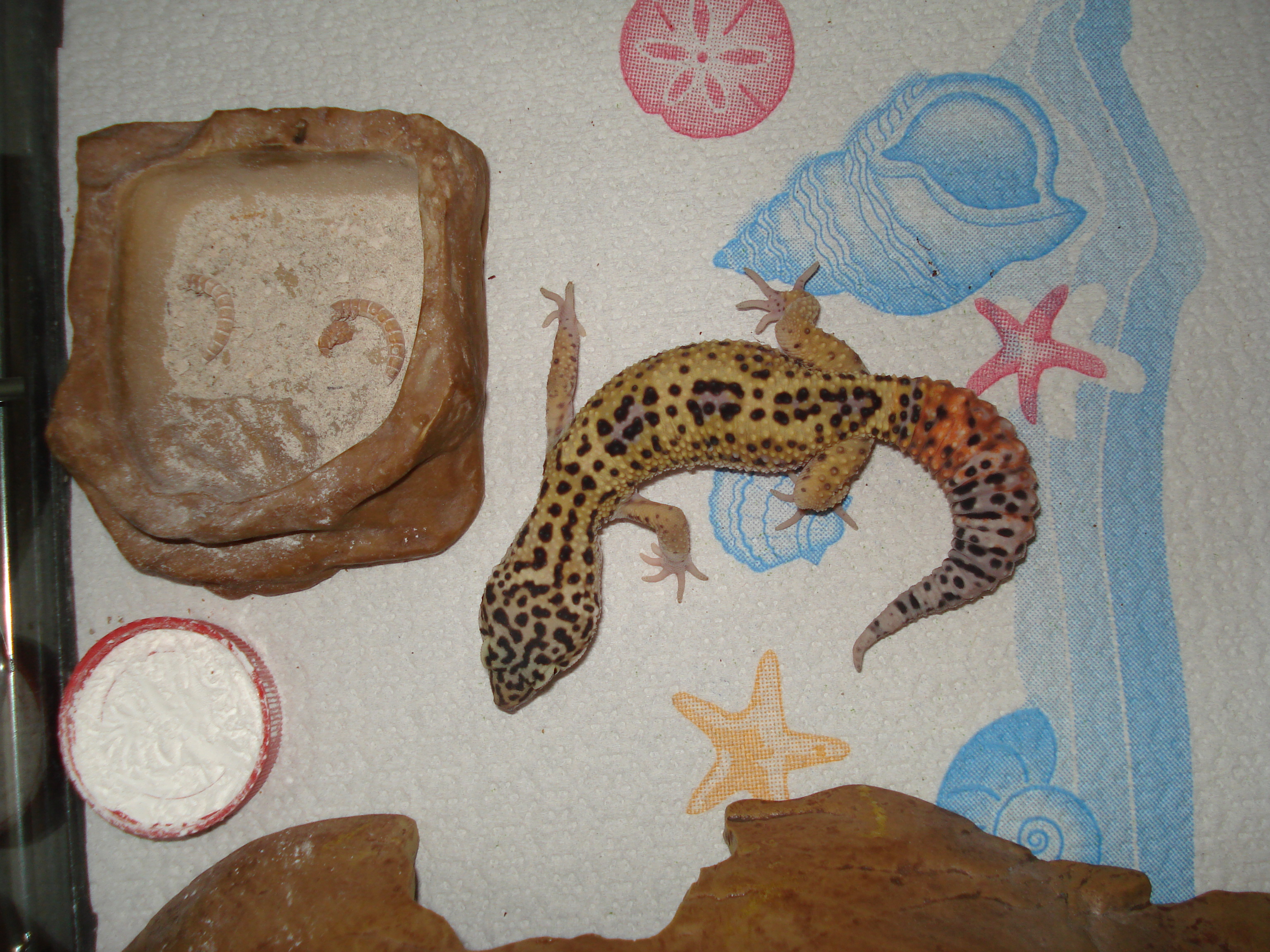
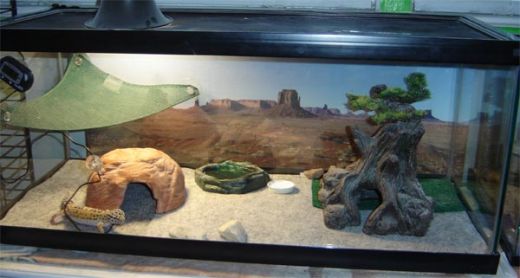
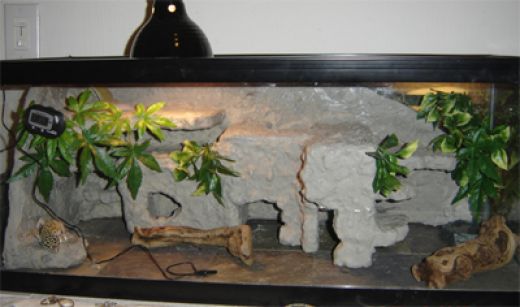
If you don’t want to take the risk of using sand as the substrate in your leopard gecko enclosure, or if you just want something a little different and maybe easier for you, there are other alternatives. Paper towels are cheap, disposable, and easy to come by, but because they are thin, you will need to watch the surface temperatures so that the enclosure isn’t too hot. Reptile carpet is washable and you get two per pack, making it easy to swap out, but your leopard gecko’s toenails may get stuck in the threads. Ceramic or slate tiles come in a variety of colors and styles; they are easy to clean and are great heat conductors. Roll-out vinyl tile or shelf liner is another great option as it is easy to clean and comes in a variety of colors and styles. The Zoo Med Excavator is a product that hardens when it dries, so you don’t have the impaction concern, and you can create tunnels and hides within the ground that resemble a natural habitat. Be aware, though, that this material can be difficult (though not impossible) to get out of your enclosure once it hardens.
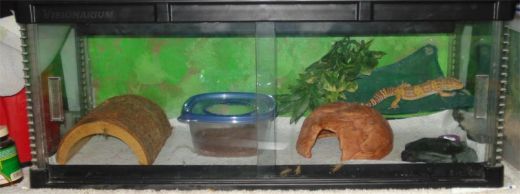
Types of Sand
If you are trying to be safe, and spot the calcium-based sand for reptiles on the shelf at the pet store, you’ll notice that it says digestible and great for reptiles. It’s not. When you pour water on the sand, it clumps as opposed to dissolving, which means when in the body, it does the same thing. There have even been studies and experiments where calcium carbonate sand has been soaked in an acidic solution, similar to the acid in the intestinal tract of a leopard gecko. Instead of dissolving, the sand sat there. A percentage of the sand had dissolved after a few days, but it took over a week for the entire amount of sand to dissolve in the acid solution. The fact that the sand dissolved is great, but in a leopard gecko, throughout the week when sand is dissolving, more sand would be digested adding to the collection in the intestinal tract, which would eventually just build. When the amount of acid in the body isn’t changing, yet the blockage is growing, it’s going to be hard to dissolve completely before a mild to severe impaction has developed. Even with proper housing, temperatures, and diet supplementation, calcium-based sand is not an advisable substrate to use. The bright dyes can potentially cause a problem, but the biggest concern is the sand. It just is not digestible. The calcium within the sand will actually entice the gecko to lick it, and once in the intestines, it will sit and create blockage.
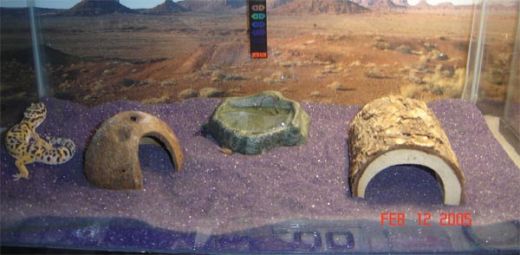
Fine play sand is a common substrate choice for leopard geckos, whether it’s purchased in a large bag for $5 from a garden store or in small bags at the reptile store for $10. It’s generally the first substrate most beginner reptile owners will purchase. Some will stick with the fine grade sand, whereas others may change to an alternate substrate choice.
Whether in the wild or in captivity, grains of sand are not all the same. They’re not going to be perfect spheres that will pass through the body with ease, but if you’re going to use sand, try to find a fine grain sand. The larger, coarse grain sand can be harder to pass and easier to lodge in the body.
If you opt to use sand in your leopard gecko enclosure, try to white play sand without any dyes or additives, and certainly no added calcium or mineral deposits. The reptile sand is fine, but most have added dyes; plus it’s much more expensive than a bag of regular play sand.
Other Substrates That Aren’t Recommended for Leopard Geckos
Bark or wood chip could be a consideration for reptiles that require higher humidity, but with leopard geckos it’s not necessary to raise the humidity levels. Plus, there have been many cases where reptiles housed on bark have had to have the bark cut out of their body where it had lodged. Crickets can hide under the bark, making it hard to find, and it’s not ideal to leave uneaten food in the enclosure. Soil, Bed-a-Beast, and other dirt beddings are not the most sanitary options, as they are prone to housing mites and parasites. Mites can be a pain to get rid of once they’re in your home. Once again, you have the issue of raising the humidity using a dirt substrate. Walnut bedding, such as walnut cob, walnut litter, and walnut shells, are prone to bacteria growth. When the bedding is wet from the water bowl spilling, feces, or urates, bacteria and/or fungus will start to grow and will spread underneath the bedding. It’s also been reported that when the reptile defecates, the walnut shells may stick to the tissues around the bum, which can eventually retract into the body, causing inflammation, irritation, infection, and may damage to the digestive tract. If you choose to use a loose substrate, whether it be sand or another product, remember that no matter how closely you watch your reptile, you just can’t guarantee that it’s not ever licking at the substrate. An option is to feed in another enclosure, but again you can’t prevent the leopard gecko from licking the substrate ever.
The great sand debate will most likely never be resolved. Keepers who are informed about the pros and cons of either approach should be able to make the decision that is best for them and their leopard geckos.

I have kept my leopards on slate tile for years with no problem. I measured the tank (a 40br..48×36 i believe) and went to home depot to pick up tiles. I layed them in the tank, making sure they fit well, then added a thin layer of wet repti-sand to the entire thing, to act as a natural grout. Usisng a paper towel, i rubbed the wet sand between the cracks of the tiles so they don’t move. This has worked VERY well for me and i have gotten Several compliments on how well my tank looks. To clean, i usually use water to spray down the tile and wipe away the poos, etc. Once a year i tear apart the tank and redo it with fresh sand and clean tile. hope this helps!
i have a leopard gecko named ella. when she was a baby we first put in just the reptile carpet, because on the care guide we got from our petstore it said to wait until you gecko was six inches long before you put in the calcium sand. so when she was six inches long we got her the calcium sand. after about a week we noticed that she wasnt eating anything, so we called the vet, and it turns out she got compacted from the sand. luckily, we nursed her back to health (although that did include a huge vet bill, and force feeding her special high protein dog food the vet instructed us to give her through a syringe, along with giving her warm baths to help her eliminate, since her intestines were plugged with the sand.) now she is happy and healthy using her reptile carpet again.
Our 3 yr old gecko has only been on carpet. He has been given small mealworms, has water in tank, humidity hide, with temps at 90 on warn side and 75 on cool side. 10 days ago started vomiting his worms whole, did poop in the first 5 days. Appt with reptile vet, have done barium xray with pictures taken over 3 days. No movement with the impaction. Giving warm bath with pedialyte and mineral oil. The vet doesn’t think he will survive surgery. Since today is Labor day, will have to wait till tuesday morning to take him in. I saw online about a vet clinic in Steamboat Springs that operated on a sand eating leopard geckco and it was sussessful. I am hoping the vet will try surgery. Any other ideas?
Very helpful! I just set up a 55 gallon aquarium for a few adult female geckos, I have been told numerous different things… one of which being that sand is a fine substrate as long as the leo is 6 inches or longer, i dont want to risk it and would rather be safe.. I think i will try the slate idea! Also I wanted to run my setup by you all and see if it seems ideal..I have a 55 on a stand, i will be doing slate, a heat pad under the tank a hide spot on each side of the tank, a basking light with a dimmer, lots of driftwood and live succulant plants(non toxic) food and water dishes, i plan on having a dish for meal worms, feeding crickets, and a dish for calcium, i also have a self waterer and a humid box with moss..im wondering if there is anything i am forgeting?
Thanks everyone!
I want to buy a leapord gecko , im wondering how much all of this will cost and if i can put a leopard gecko (or 2) in a large fish tank ?
Great article. I’m so disappointed that even though so many geckos continue to die from impaction and impaction related issues that people still continue to sell calci-sand. My personal substrate of choice for years has been paper towels. Every other day I change the paper towels and once a month i disinfect the entire enclosure. Slate is awesome though and if I had a smaller collection or didn’t use a rack system I would go for that option over anything else.
Thank you for the great article and reference to ExcavatorTM Clay Burrowing Substrate, this is what I want to use now thanks to your mentioning of it. Now just to track some down where I live. Thank you!
I am so overwhelmed with the countless opinions on countless forums about whether or not to use sand.
I am so sick of all of the different answers that I am going to just not use sand anymore!
I like the slate tile idea, but please help me with this one question.
I have undertank heating and sometimes use an overhead ceramic bulb too, won’t the tile get super hot? And how will the heat from the undertank heater get through the tile?
Thank you
Heat on tile – The tile spreads the heat fine. Use a digital thermometer with probe to check temps. If it’s too hot due to the UTH get a thermostat if the ceramic emitter is making things too hot get a lamp dimmer and adjust till the heat’s right
i think carpet is great, thats probably what we are gonna do with our gecko.
Hi there,
I’m interested in raising awareness about the mis-information about calcium sand. As your article has said, some well informed people still choose to use sand, but really that is only as long as the rest of their management is perfect. Surely this is a good enough reason for amateur and new leopard gecko owners to be advised against it first off?
I’m considering approaching pet shops and asking them to stop advertising calcium sand as the main ‘go to’ substrate for leopard geckos. Does anybody have any additional evidence or advice which I could use to back up my request? I will also begin talking to leading reptile vets in my country (UK), and see whether they can provide statements too.
i use sand and always have done and it has never caused any problems so i will continue to do so
Hey guys, I am a professional reptile breeder and do so for a living. I do agree do NOT use calcium sand, that stuff is absolute garbage and honestly sand off the road would be better than it ( don’t actually use sand off the road). I have always used walnut sand for my adults and have had great success, as for the “bacteria problems” there aren’t any if you take a minute or two to remove poop as it is sanitary and will have nothing in to grown from without the poop, and the “bum sticking” is just not a problem if it does get stuck to them it will simply dry up and fall off, or they will go into their moist hide and drag it off almost like a dog, as for my babies waiting for sale I keep them on paper towels until they are at least 6 months old, then I move them to the walnut sand before selling them. I hope this helps clear up some confusion, feel free to email me at [email protected] if you have any questions
Hello all,
I believe that sand is very unnatural for those animals. As you said, just because something lives in the desert it doesn’t mean that it walks on sand all of the time or that the desert is sandy. Only lizards with fringed toes like teratoscincus or acanthodactylus are truely adapted for sand living.
I wonder though, just like the aforementioned teratoscincus, leopard geckos can burrow too. Do they burrow in the substrate, or just use ready-made hides? If I get a leopard gecko, I would use a particulate substrate only if it burrowed, otherwise I would stick to Paper and a humid hide. And the substrate would be a firmer mixture of sand and clay soil. Thank you very much.
I have heard of some leopard geckos that like to dig, though I don’t know if any that bury themselves. I do have 2 leopard geckos on a substrate of mostly coco-fiber mixed with a little desert sand and leaf litter. I think that’s a bit more true to their natural substrate than plain sand. Check out the Gecko Time articles about bioactive substrate.
yes i agree
I’ve had my leopard gecko for 14 years (15 yo) and I’ve always used calc sand (I don’t change it but once a year either), I’ve also probably broken every rule for keeping a leopard gecko at least twice (not purposely). He is a champion gecko and will live forever. He has ran away 5 times (when he was younger). He killed a baby aquatic snake (not mine) that got loose and slipped into his tank. I mainly feed him outside bugs that I find and meal worms. I’ve never powdered his crickets or anything. He has bite me twice though but handles pretty well. I’ve also not used any special lighting for him but since I’m adding plants I think I will change it to a 5000 K bulb. Any ideas on the terrarium plants for a leopard gecko?
Your gecko reminds me of the guy who smokes, drinks and runs around but lives to be 95. The problem with most plants is that they require water which can raise the humidity, but given your track record, I’m not going to debate anything. I’d recommend succulent plants. I honestly don’t think they will do well planted in calci-sand, so here are your choices:
–replace the sand with coco-fiber mixed with a little sand and leaf litter (that’s what my one bioactive leopard gecko enclosure has as a substrate) and plant the succulents
–keep the succulents in their little pots and bury the pots in the sand. These plants are meant to get dry and then get watered, so when they get dry, you can take the whole pot out, drench it with water and re-bury it.
Good luck.
Thanks for the response! I was thinking of putting the plants in containers in the tank. I could only imagine the calc sand being at a ph of about 10 lol. They are all easy to grow succulents propagated from a mother plant.
Look I’m not saying my way is the best way to raise a gecko but I do believe in feeding him a wide variety of insects (not just store bought ones). Often times diseases come from the pet stores not in the wild. Some cockroaches I believe are really good for them, NOT house roaches though. I also feed him grasshoppers, giant crickets, and an occasional moth. Then again me and him are still learning as we go so none of this is scientific yet. Appreciate the info!!
My Leo likes to burrow, he used to kick the sand out of his hide to make it big and deep. When I found out calcium sand was horrible for him I moved to newspaper. Newspaper is very easy way to clean his cage and made the process so much faster, but my Leo really loved to play in the sand and dig. Anyone know a safe and easy to maintain substrate like a sand or dirt I could use to keep him happy, but that isn’t too pricey?
Some people keep their leos in a bioactive enclosure which utilizes substrate made from coco fiber and a small amount of sand mixed in. There are 2 articles in Gecko Time about bioactive substrate:
http://geckotime.com/bio-active-reptile-substrate/
http://geckotime.com/creating-a-bioactive-leopard-gecko-setup/
If you don’t want to do this, another solution is to get a gladware container, cut a hole in the top and put some moist coco fiber in there. Then your gecko can dig to its heart’s content.
My leo is scheduled for an appointment saturday may 28th 2016 because of compaction. I used calcium sand and npw he and another geck are probably gonna die. Do not use calcium sand they will digest it.
I’m sorry to hear that. I still believe that they should be able to digest it just fine. Cavemen and Neanderthals use to have an “active” organ that could digest sand and dirt more easily. I’m pretty sure geckos can be fine with eating a little sand. If they lace the sand with something that causes it to compact in the digestive tract then it would be a different ballgame.
Ive always used the reptile carpet. Hearing stories like that. I will never use sand
My leopard gecko has been living in sand for about 10 years( starting when it was big enough) It’s zilla desert blend ( ground English walbut shells) hes never had any health problems and has no complaints;)
Different things work for different geckos. I would only suggest that as your gecko gets older, if it starts to show signs of aging in other areas, watch it carefully to make sure no problems with living on sand develop due to aging.
Aliza, I am wondering what you mean by other signs of aging? I just stumbled upon this forum and am a bit worried. My Leopard Gecko is going on 23 years in October and I have had him on sand since about age 4. I also USE to feed him a lot of insects from outside but curbed that as a few spiders got a good bite on him right near his eye while partially in his mouth. He also has survived two instances of being knocked off a shelf by cats/dogs, the second time (about a decade ago) he lost his tail. Anyhow other than developing a tendency for his skin to stick around the eyes when shedding ( which 70% of the time needs to be warm wash clothed away) he seems healthy. I feed him 4 crickets a day which I rarely dust but feed the crickets lots of organic kale and lettuce and celery greens. Fresh water every other day and daily poop scooping. He has a heat rock and then a heating pad buried under a shallow layer of sand. Let me know what you think I should look for or could be done. Thanks!
I probably meant that sometimes a gecko can do well under certain conditions, but when it gets older and its body doesn’t work as well as it used to, then certain things that didn’t bother it in the past can be more difficult. If you have a 22 year old gecko who has done well on sand to date I feel you may as well not stress him out by making big changes. If you start to see really sandy poops, it would mean that he’s ingesting sand and then maybe you should do something. You realize, of course, that at 22, he may die at any time of natural causes regardless of what you do.
I am housing my leopard gecko 20 gallon tank and I use sand for a more natural habitat for him. The only thing that concerns me about having Sand in his tank is when I feed him crickets he gets sand in his mouth and is consumed in the sand as he is eating the crickets. Now is this going to be a problem and will it make him sick. ?????
The gecko could easily end up impacted from ingested sand. Sand is not a natural leopard gecko substrate anyway. In the wild they live on packed earth, not sand-dune sand. For a more natural substrate consider the following:
–excavator clay, which is kind of heavy and as far as I know cannot be reconfigured
–Lugarti reptile substrate. Here’s a Gecko Time article about it: http://geckotime.com/interview-robert-coral-lugarti-reptile-supplies/
–I’ve never tried this (and it’s expensive) but you could check out Brookstone kinetic sand at brookstone.com
–Most people who make bioactive substrates for their leopard geckos use eco earth. Here are 2 Gecko Time articles about that:
http://geckotime.com/creating-a-bioactive-leopard-gecko-setup/
http://geckotime.com/bio-active-reptile-substrate/
You could also use beige ceramic tile for a more natural look. If you just have to keep the sand, make sure it’s play sand and not calci-sand and/or feed your leopard gecko in a separate enclosure. This often doesn’t work because the gecko is uncomfortable in a new place and can refuse to eat.
I left my gecko eggs in chinchilla sand over night while their incubator dried overnight. When I woke up one gecko had hatched and I don’t know if it ate some.
Could someone tell me the simptons of this and how to help?
Thanks
Newly hatched geckos don’t eat as soon as they hatch. It’s unlikely that they’re ingested a bunch of sand and more likely that the yolk that is all over them picked up some of the sand. If for some reason they ingested sand, there’s really nothing you can do about it. Clean them off and keep an eye on them.
First of, great article! I am thinking about getting a leopard gecko, and I am considering many different substrates. One which I might use being a mixture of sand and soil called Leo-Life, but I worry this might cause Impaction for my new gecko. I am firmly against sand because it is just not good for leopard geckos, but the description of this produced says “reduced risk of Impaction “. Is this true or is it a whole lot of garbage it produces do get people to buy the (expensive) product? If there is any risk of Impaction, no matter how small, I will change the substrate. I’ve heard ZooMeds Eco-Earth is okay, but I worry if that will rise the humidity level, and if it does is this a serious problem, or just an annoying one?
Many people who keep leopard geckos in bioactive enclosures use eco earth or some variant of that. I have mixed eco-earth with sand for other species that need a planted environment and it has been fine. I kept a pair of leos successfully on eco earth for about 5 years (I took them off it when I switched tanks around). It does tend to get a bit dry and dusty so I did spray it occasionally. I don’t worry about humidity with leopard geckos as long as there’s no daily (or weekly) misting going on. You could probably do the substrate more cheaply if you just got a small bag of desert sand and mixed it with eco earth (maybe 25% sand, 75% eco earth). I also kept dermastid beetles in there to clean up the poop. The only problem is that they breed pretty well and sometimes I’d end up with a whole lot of drowned beetle larvae in the water dish. Read the Gecko Time article on bioactive enclosures for leopard geckos: http://geckotime.com/creating-a-bioactive-leopard-gecko-setup/
Hi – I am really concerned about our new young leopard gecko, we’ve had him for 2 weeks – from the petshop – and they sold us a vivarium with sand, we have set it up – assuming that we;ve been given appropriate products. Now, the gecko isn’t eating much – not much interest in food (crickets and worms). He also looks like his colour is fading – which i hope is due to shedding – how young does shedding begin?
we are amateurs and I am trying to learn more.
As a priority now I feel I need to remove the sand and change to different base
Fading color does indicate shedding and shedding starts within the first 3 days of hatching and occurs more often in young leopard geckos who are growing. Often geckos that are shedding don’t eat. Geckos in a new space tend not to eat for awhile either. As you’re suspecting, geckos on sand, especially young geckos, can get impacted. Change the sand to ceramic tile, paper towel or reptile carpet and keep offering food. Hopefully it will start eating soon. Also, read some care sheets. Mine is here: https://geckcessories.wordpress.com/leopard-gecko-care-sheet/
Thankyou for the info – appreciate it. And he’s shedding ! Phew!
I have a gecko his name is zebblin i have realized that he is a very dramatic eater when it comes to crickets sometimes he will just get a mouthful of sand so i am not sur id i should switch to something different. If u could help that would be amazing
I highly recommend switching to something different, especially if you notice that the poops are sandy. My favorite substrate is ceramic tile. The slightly textured beige tile is really cheap and looks nice, though you may need to have a few pieces cut. You can also use repti-carpet or paper towel, which I don’t think is as nice.
The downside to paper towels is that your gecko cannot burrow in them and they are not natural to their native habitats. If your gecko doesn t like to burrow and you aren t worried about a natural looking environment, consider paper towels as a substrate for your leopard gecko.
I was advised against all sand and to use artificial grass. But I see nobody else here has said they use such a thing. Is there a reason for that and have I been misinformed?
I have never heard of artificial grass. However, I have heard of repti-carpet, which is green and sort of grass-like (though not tall like grass): https://www.chewy.com/zilla-terrarium-liner-green-15-20h/dp/125302?utm_source=google-product&utm_medium=cpc&utm_campaign=hg&utm_content=Zilla&utm_term=&gclid=Cj0KCQjwyoHlBRCNARIsAFjKJ6CmwiNjCMNvsSHFdluHCY4I8BIzPgJfoNx3zkqQZLx9byUI5CX9yWIaAhWBEALw_wcB
My preference is for ceramic tile.
I have kept leopard geckos for about 25 years now, maybe more. I have always used childrens playsand. I have never had any issues with it. Bark is bad, ads humitidy, crickets can hide in it and the bacteria grows. Same issue with dirt, humidity. While I don’t think these lizards live in the egyptian desert but, the afghan desert. its filled with sand, hard clay, rock and what not. If you want a closer to wild substrate, sand, rock etc.. thats going to simulate living situations. If you are worried about this type of situation and really don’t want to risk it.. paper towel, carpet etc.. I choose and stand by my choice to use sand and rocks. scoop out the ppop and once in a while take all the substrate out and replace it. simple, looks good and if you look after your pets, you really shouldn’t have any issue.
My first gecko (also my first reptile) was housed in a tank with sand for reptiles that they sold at the pet store. I had done my research before and knew about the risk of impaction, but the store employee assured me that this peticuliar sand was digestible and perfectly safe for my gecko, so I bought it. It went well for 2.5 years, and then one day I noticed that my gecko was not eating as much as usual. I tought it was just due to the fact that we were in the middle of the winter, and didn’t think much of it. Being also inexperienced, I didn’t think his behavior was abnormal, until one day I saw him eat a worm, and throw it back up. I then got him checked up, and he was completely impacted. We tried everything to save him, but unfortunately I caught the impaction too late and he eventually died…
I later got another gecko, and this time he’s housed exclusively on paper towels. It’s not pretty, but at least there’s zero risk of causing an impaction from the sand. He’s going to turn 8 years old next month, and he’s still very happy and healthy!