
Aliza / Featured Articles / 1 Comment / March 12, 2013
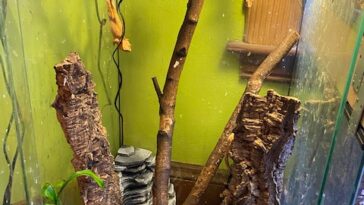
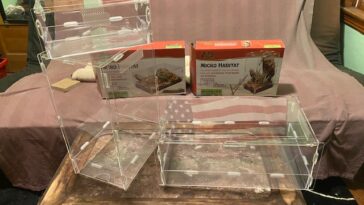
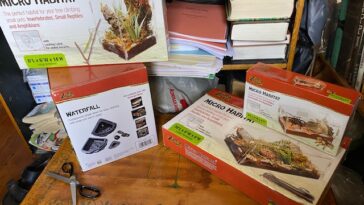
There are two main ways that geckos are housed: display tanks, usually made from glass or plastic, and racks — plastic tubs set in a shelf or drawer frame. Those who prefer to use racks give the following reasons: It permits large numbers of geckos to be kept in a space-efficient, homogeneous manner. Most geckos are [...]
Read More »
Kevin Saunders / Featured Articles / 8 Comments / March 4, 2013
I’ve been asked to write about a controversial topic in the reptile world-hybrids. I recently purchased a small group of third generation crested gecko x chahoua hybrids, which marks the beginning of my personal experience with gecko hybrids. I’ve kept reptiles for many years and have owned numerous hybrid snakes in that time.
Read More »
Aliza / Featured Articles / 3 Comments / February 26, 2013
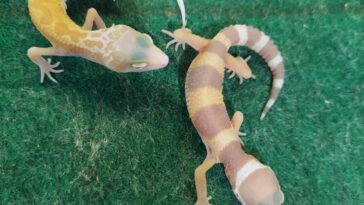
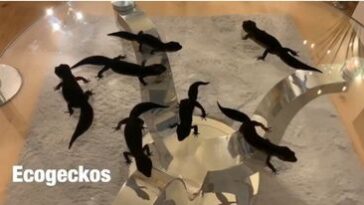
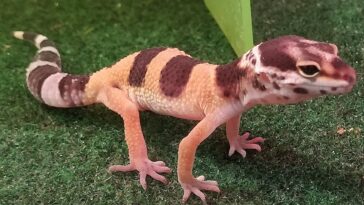
Eublepharis macularius, commonly known as leopard geckos are one of the classic “starter geckos”. How many of us kept leopard geckos as our first reptile? How many of us have “moved on” to more challenging species? For some of us, though, leopard geckos remain our passion and prime interest.
Read More »
Lauren O'Brien / Featured Articles / 2 Comments / February 20, 2013
I’ve been involved with various animal rescue organizations since I was sixteen years old. I have helped cleaned cages and plenty of litter boxes, fostered (dogs, cats, and rats), and even took pictures for a shelter so they could list their available animals online. When my passion for reptiles started in the early spring of 2012 I quickly realized that the rescue resources available for “regular” pets such as cats and dogs were not available for the scaly creatures I loved.
Read More »
Aliza / Featured Articles / No Comments / February 12, 2013
Since “controversy” is explicitly about difference of opinion, it’s no surprise that the responses to our first “Prose and Controversies” (multi-species enclosures) are all over the map. Responses range from “no, no, no” to “it works for me”.
Read More »
Shannon Hiatt / Featured Articles / 1 Comment / February 5, 2013
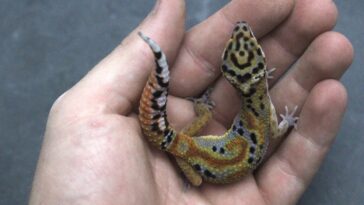
Have you seen the Acid Stripe Leopard Geckos produced by Enigmatic Reptiles in California? If you are answering in the affirmative, then you KNOW what I mean when I say “you’ve gotta see these”! If you haven’t seen them yet, head to Travis’ web site (http://enigmaticreptiles.com/) or to his FaceBook page (http://www.facebook.com/pages/Enigmatic-Reptiles/226575520734555) and enjoy the “eye candy” provided by these spectacular Leopard Geckos.
Read More »
Aliza / Featured Articles / 2 Comments / January 29, 2013
Reptile enthusiasts who are interested in small geckos, will enjoy this installment of Three to Get Ready about the genus Stenodactylus, a tiny gecko originating in North Africa and the Middle East.
Read More »
Marcia McGuinness / Featured Articles / 1 Comment / January 22, 2013
Having an ardent interest in Australian reptile species, I jumped at the opportunity to read and review this 352-page installment in a series of 7 books written by Dr. Danny Brown called “The Australian Reptile Keeper Series” by Reptile Publications. I paid particular attention to the species I keep, as well as some of the species I have been curious about.
Read More »
Herve Saint Dizier / Featured Articles / 4 Comments / January 15, 2013
Thermobia domestica, also known as “silverfish” or “firebrats” is the most commonly found species of silverfish on the insect supplier’s list. They belong to the order Thysanura, one of the most primitive orders of insects, with direct ancestors in Jurassic rock layers. Todays’s species does not differ much from those ancestors.
Read More »
Aliza / Featured Articles / No Comments / January 8, 2013
This week Gecko Time introduces a new monthly interactive feature called “Prose and Controversies”. Here’s how it works: Each column will feature an issue that has been controversial for gecko keepers. We will attempt to briefly explore as many aspects of the controversy as possible. At the end of the article is a submission box where we encourage you to send us your thoughts and ideas about this topic.
Read More »